Why Chakan continues to be Pune’s top industrial and warehousing destination
India’s warehousing industry is entering a defining phase of transformation. What was once seen as a backend storage function is now emerging as a technology-driven growth engine for retail, manufacturing, e-commerce, automotive, FMCG, and third-party logistics businesses. As supply chains become more complex and customer expectations continue to rise, warehouses are evolving into intelligent operational hubs powered by data, robotics, and connected technologies.
The shift is happening at a remarkable pace. According to recent industry estimates, India’s warehouse automation market was valued at nearly USD 822 million in 2025 and is projected to cross USD 2.8 billion by 2034, growing at a CAGR of almost 15%. At the same time, the broader logistics automation market in India is expected to grow from USD 2.1 billion in 2025 to more than USD 9 billion by 2033.
This momentum reflects a larger structural change across India’s industrial and logistics ecosystem. Warehouses today are no longer designed only for storage capacity. They are increasingly being planned for speed, scalability, operational intelligence, and real-time visibility.
The growth of warehouse automation in India is closely linked to the rapid expansion of e-commerce, quick commerce, and organised retail. India’s e-commerce market alone touched nearly USD 130 billion in 2025, significantly increasing the pressure on logistics providers to deliver faster and more accurately. Same-day and next-day delivery expectations are forcing companies to rethink traditional warehouse operations and invest in smarter infrastructure.
As a result, warehouses are becoming more automated across every operational layer. Conveyor systems, automated sortation, robotic picking solutions, automated storage and retrieval systems, and intelligent warehouse management software are now being deployed at scale.
One of the most significant industry trends is the increasing use of predictive intelligence inside warehouses. Earlier, warehouse management systems mainly focused on tracking inventory and recording transactions. Today, advanced systems can forecast demand fluctuations, optimise inventory placement, allocate labour dynamically, and identify operational bottlenecks before they impact fulfillment timelines.
The growing adoption of AI in logistics and warehousing is enabling companies to move from reactive operations to predictive decision-making. Businesses are using intelligent algorithms to improve order accuracy, reduce idle inventory, optimise routing inside facilities, and improve overall throughput. Industry studies suggest that AI-enabled logistics systems can reduce operational costs by up to 15% while improving inventory efficiency significantly.
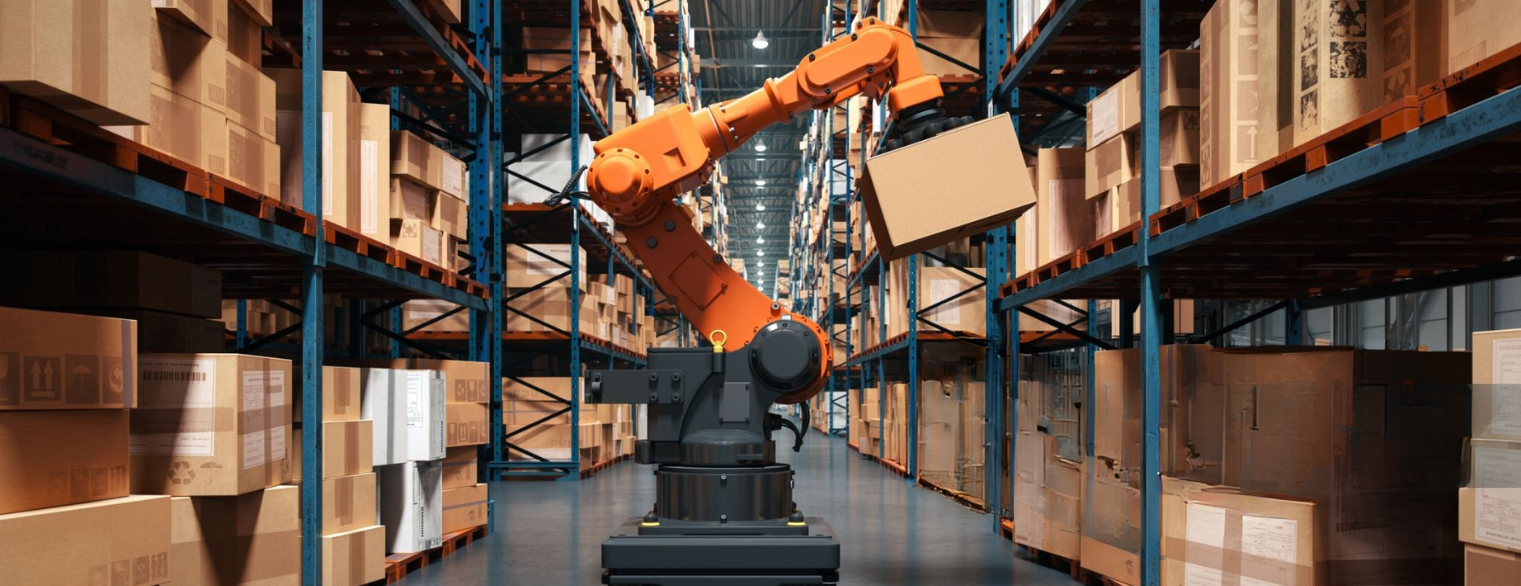
Robotics is also becoming central to warehouse modernisation strategies. Autonomous mobile robots, robotic pallet systems, and automated guided vehicles are helping facilities process higher order volumes with greater precision. According to industry forecasts, fully automated warehouse systems in India are expected to grow at over 27% CAGR over the next few years, especially across sectors such as pharmaceuticals and cold chain logistics.
Importantly, automation adoption in India is no longer restricted to large multinational operators. Mid-sized logistics companies and regional fulfillment networks are increasingly implementing semi-automated systems that deliver productivity gains without requiring complete infrastructure redesign. Semi-automated systems currently represent nearly 49% of the Indian warehouse automation market, reflecting the industry’s practical transition toward scalable automation models.
The integration of AI in warehouse automation in India is also driving major improvements in operational accuracy. Computer vision systems are now being used to detect damaged goods, monitor warehouse movement, automate barcode scanning, and reduce picking errors. Intelligent quality-control systems can analyse products in real time, improving dispatch reliability while reducing manual intervention.
At the same time, connected technologies are creating more integrated warehouse ecosystems. Sensors, RFID systems, and connected devices are enabling real-time tracking across inventory movement, equipment performance, temperature monitoring, and fleet coordination. The growth of IoT in warehousing in India is helping operators improve visibility across the entire supply chain while enabling predictive maintenance and better asset utilisation.
Earlier, logistics automation initiatives in India were largely concentrated in major consumption and industrial hubs such as Mumbai, Delhi-NCR, and Bengaluru. Today, however, the momentum is steadily shifting toward Tier II and III cities, where improving infrastructure and rising digital adoption are creating new opportunities for organised warehousing growth.
Industry experts note that decentralised logistics parks, enhanced last-mile connectivity, and supportive government initiatives are helping smaller cities emerge as efficient fulfillment centres. As supply chains become more distributed, these emerging markets are playing a critical role in improving operational agility and strengthening overall network resilience.
This shift is also influencing how modern warehouses are being planned and developed. Instead of introducing automation after facilities are operational, companies are increasingly adopting a tech-first approach, where warehouses are designed from the ground up to support intelligent systems, automated workflows, and scalable digital infrastructure
Another major shift shaping the industry is the emergence of dark warehouses and lights-out fulfillment models. These highly automated facilities rely heavily on robotics and intelligent systems to operate with minimal human intervention. While fully autonomous warehouses are still evolving in India, many companies are already experimenting with portable robotic fulfillment systems and AI-enabled distribution models to increase speed and reduce labour dependency.
Sustainability is becoming equally important in this transformation journey. Warehouses are increasingly expected to deliver operational efficiency while reducing environmental impact. AI-powered systems are helping companies optimise energy usage, reduce fuel consumption, improve route planning, and minimise waste generation. Industry estimates suggest that intelligent logistics optimisation can reduce emissions-related inefficiencies by nearly 10–15% through better planning and operational visibility.
The rise of automation in India’s supply chain is also changing workforce dynamics across the industry. Contrary to common assumptions, automation is not eliminating human roles entirely. Instead, it is redefining them. Warehouses are increasingly requiring skilled professionals capable of managing intelligent systems, analysing operational data, handling exception-based workflows, and overseeing integrated technology platforms.
Industry experts increasingly believe that the future warehouses will not be fully human-free but collaboratively intelligent, where technology handles repetitive tasks while human expertise focuses on strategy, problem-solving, and operational oversight. Gartner recently projected that by 2030, nearly 50% of new warehouses globally will be designed around robotics-centric operations.
The broader ecosystem surrounding intelligent warehousing is also strengthening rapidly. India’s artificial intelligence market is expected to reach nearly USD 17 billion by 2027, supported by rising enterprise adoption and strong digital infrastructure development. This growth is expected to further accelerate the adoption of intelligent warehousing technologies across industries.
The conversation around AI in warehouse automation in India is therefore moving beyond experimentation. It is becoming a long-term business strategy focused on resilience, agility, and scalable growth. Companies are increasingly recognising that intelligent warehouses are not just operational facilities; they are strategic assets that directly influence customer experience, supply chain efficiency, and business competitiveness.
With manufacturing growth accelerating through initiatives like the Production-Linked Incentive (PLI) schemes and e-commerce rapidly expanding into Tier II and Tier III markets, warehouses are evolving from conventional storage facilities into dynamic, high-speed fulfillment and processing hubs. The future of India’s logistics sector will depend on how successfully businesses integrate advanced automation with intelligent digital systems, enabling real-time decision-making, improved operational efficiency, and stronger supply chain resilience.