Why Chakan continues to be Pune’s top industrial and warehousing destination
The journey of a product no longer begins at a warehouse and ends at a customer’s doorstep. Today, it moves through a connected ecosystem powered by speed, visibility, automation, and data-driven decision-making. As online retail continues to evolve and customer expectations rise, businesses are being pushed to rethink how supply chains operate at every stage.
Consumers expect same-day deliveries, accurate tracking, smooth returns, and uninterrupted service during peak demand seasons. At the same time, brands are expanding into new geographies, managing larger product portfolios, and handling increasing order volumes. To keep pace, logistics service providers and industrial developers are investing heavily in systems that combine physical infrastructure with intelligent technology.
As supply chains evolve, tech-enabled logistics infrastructure is becoming a defining factor in the growth strategies of both retailers and logistics service providers.
The rise of digital commerce has fundamentally changed how goods are stored, processed, and delivered. Traditional warehouse models designed only for bulk movement are no longer sufficient for modern fulfillment requirements. Instead, businesses now require agile operations that can process thousands of individual orders with accuracy and speed.
This transformation has accelerated the demand for advanced e-commerce logistics infrastructure that supports inventory visibility, rapid order processing, automated picking systems, and real-time shipment coordination. Facilities are now being designed to function as intelligent fulfillment centers rather than static storage spaces.
The ability to deliver quickly has become a major competitive advantage. Customers often make purchasing decisions based on delivery timelines and service reliability. As a result, companies are locating warehouses closer to consumption hubs, improving transportation connectivity, and integrating digital tools that help optimize inventory placement.
Technology also enables better forecasting. Retailers can anticipate seasonal demand spikes, identify fast-moving products, and reduce stockouts through predictive analytics. These insights help businesses maintain operational continuity while minimizing unnecessary inventory costs.
Third-party logistics providers are playing a larger role than ever before in supporting growing businesses. Many brands prefer outsourcing warehousing and distribution functions instead of building large in-house logistics networks. This approach allows companies to focus on product development, customer engagement, and market expansion.
To address evolving customer expectations, logistics companies are rapidly expanding across regions while investing in agile infrastructure designed to support diverse industry requirements. Modern 3PL logistics solutions combine integrated inventory management, transportation coordination, automated material handling, and end-to-end supply chain visibility to deliver greater efficiency, scalability, and operational control.
This evolution is particularly important for industries with dynamic demand cycles such as retail, pharmaceuticals, electronics, and fast-moving consumer goods. Businesses operating in these sectors need logistics partners capable of responding quickly to fluctuations in order volumes while maintaining efficiency.
Scalability has become a central requirement. A growing business may need to increase storage capacity during festive periods or rapidly expand into new cities. Flexible infrastructure allows logistics providers to support these changing demands without operational disruptions.
Warehouses are no longer viewed as passive storage assets. They are now operational hubs where automation, analytics, and connectivity work together to improve productivity.
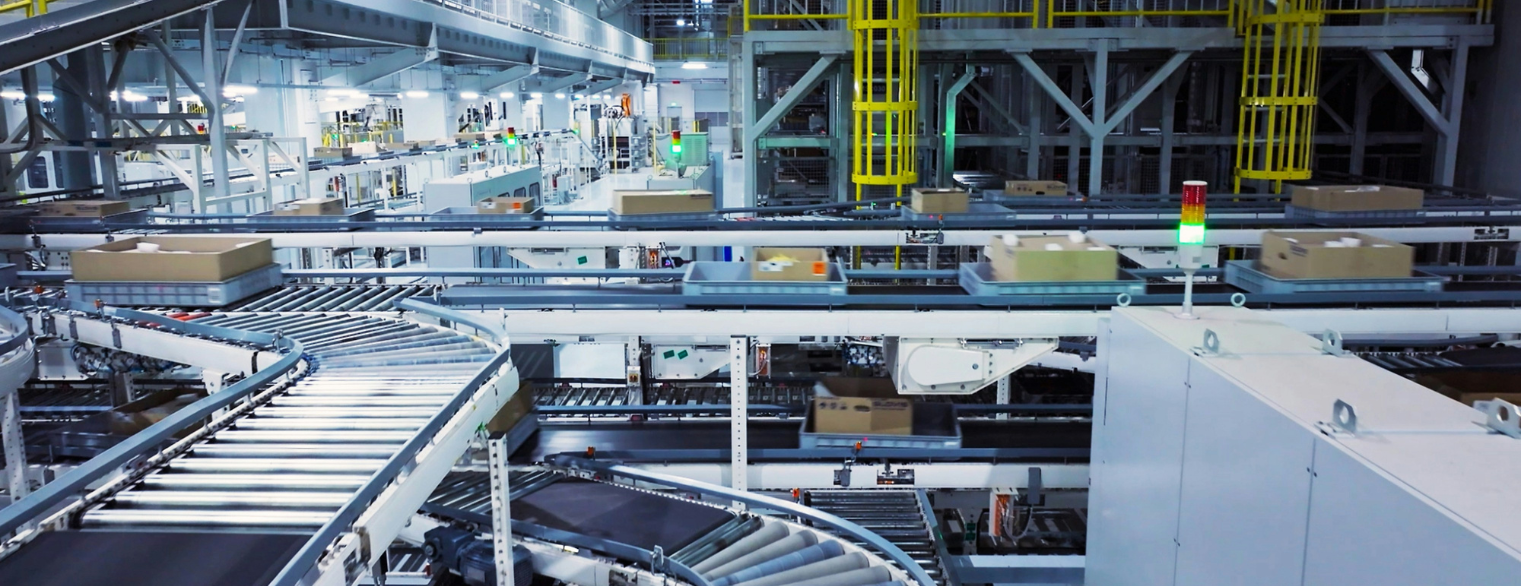
Across the industry, companies are adopting smart warehousing solutions that streamline inventory movement and reduce manual dependency. Automated sorting systems, barcode scanning, robotics, and sensor-driven monitoring help improve speed and accuracy across warehouse operations.
Data generated inside warehouses is equally valuable. Managers can track order flow, labor productivity, equipment performance, and inventory turnover in real time. These insights allow businesses to make faster operational decisions and continuously improve efficiency.
Safety and sustainability are also becoming important priorities. Modern facilities increasingly include energy-efficient lighting, intelligent ventilation systems, optimized layouts, and sustainable construction practices. These improvements not only reduce operational costs but also contribute to long-term environmental goals.
The integration of digital technologies within industrial infrastructure has also improved coordination between warehouse operations and transportation networks. Real-time communication helps reduce delays, improve route planning, and maintain service consistency.
One of the biggest advantages of modern logistics ecosystems is the ability to create seamless communication between multiple stakeholders. Retailers, warehouse operators, transport providers, suppliers, and customers can now access synchronized information through integrated systems.
The adoption of cloud-based logistics platforms has made it easier to manage operations across geographically distributed networks. Businesses can monitor inventory, track shipments, manage orders, and analyze performance metrics from centralized dashboards.
This visibility supports better decision-making and faster response times. For example, if inventory levels decline in one region, businesses can immediately reroute stock from another location to avoid service disruptions. Similarly, logistics managers can identify transportation bottlenecks and optimize delivery schedules in real time.
Digital integration also improves customer experience. Consumers increasingly expect transparency regarding shipment status, delivery timelines, and return processes. Connected systems help businesses provide accurate updates and maintain stronger customer trust.
Infrastructure today is not only about buildings, roads, or storage capacity. It is about creating an environment where operational agility and technological intelligence work together.
Strategically located logistics parks are becoming critical assets for companies aiming to improve distribution efficiency. Facilities positioned near highways, ports, airports, and urban consumption centers help reduce transit times and improve connectivity.
Developers are also designing industrial parks that support multiple business models under one ecosystem. This includes fulfillment centers, distribution hubs, cold storage facilities, and manufacturing support infrastructure within integrated campuses.
Such ecosystems encourage collaboration between businesses while improving resource utilization. Shared transportation networks, common utilities, and centralized management systems contribute to operational efficiency at scale.
The demand for resilient supply chains has further accelerated investment in digital infrastructure. Companies now prioritize operational continuity, especially after disruptions caused by global events, changing consumer patterns, and unpredictable market conditions.
Organizations that invest in adaptable infrastructure are better positioned to respond to changing market realities. Whether it involves expanding into new regions, managing higher order volumes, or introducing new service models, infrastructure flexibility directly impacts business performance.
The next phase of logistics growth will be defined by intelligence, automation, and sustainability. Artificial intelligence, predictive analytics, and connected devices are expected to become even more integrated into supply chain operations.
Future warehouses may rely heavily on autonomous systems that can process orders with minimal manual intervention. Predictive maintenance tools could identify equipment failures before they occur, reducing downtime and improving productivity.
Sustainability will also continue to shape infrastructure development. Businesses are increasingly seeking facilities designed to reduce carbon emissions, improve energy efficiency, and support greener operations.
At the same time, consumer expectations will continue evolving. Faster deliveries, hyperlocal fulfillment, and personalized customer experiences will place additional pressure on logistics networks to become more agile and responsive.
In this environment, businesses that embrace tech-enabled logistics infrastructure will be better equipped to handle complexity, improve service levels, and drive long-term growth.
The future of commerce depends not only on what companies sell, but also on how efficiently products move through the supply chain. Intelligent infrastructure is becoming the foundation that enables businesses to scale with confidence, adapt to changing market demands, and deliver consistent value in an increasingly connected world.